
March, April, September, October
Calendar
Sowing
- JAN
- FEB
- MAR
- APR
- MAY
- JUN
- JUL
- AUG
- SEP
- OCT
- NOV
- DEC
Flowering
- JAN
- FEB
- MAR
- APR
- MAY
- JUN
- JUL
- AUG
- SEP
- OCT
- NOV
- DEC
Harvest
- JAN
- FEB
- MAR
- APR
- MAY
- JUN
- JUL
- AUG
- SEP
- OCT
- NOV
- DEC
The months are a guide for a temperate zone.
SKU: GS1642
Mizuna Green
Mizuna has a distinctive flavour profile and is one of the most interesting vegetables around. Germination rate 95%.
€1.99
In stock
Prices include VAT. The price shown is for one seed packet.
- Germination measured for the batch
- Paper packet with the packing date
- Within two working days, anywhere in the country.
- Ordered by 15:00 — shipped the same working day
- 14-day return — the right of withdrawal by law
Specifications
- Origin
- Italy
- English name
- Mizuna Green
- Germination rate
- 95%
- Weight
- 0.005 kg
Sowing
Sow once the soil is warmer than 10 °C, in a sunny spot sheltered from the wind. Sow about three times as deep as the seed is thick, into finely raked soil with no clods on top. Spacing is as printed on the packet — thin the seedlings out after they come up. Water with a fine spray so the seed is not washed away, and keep only the strongest plants.
Description
Mizuna Green — variety description
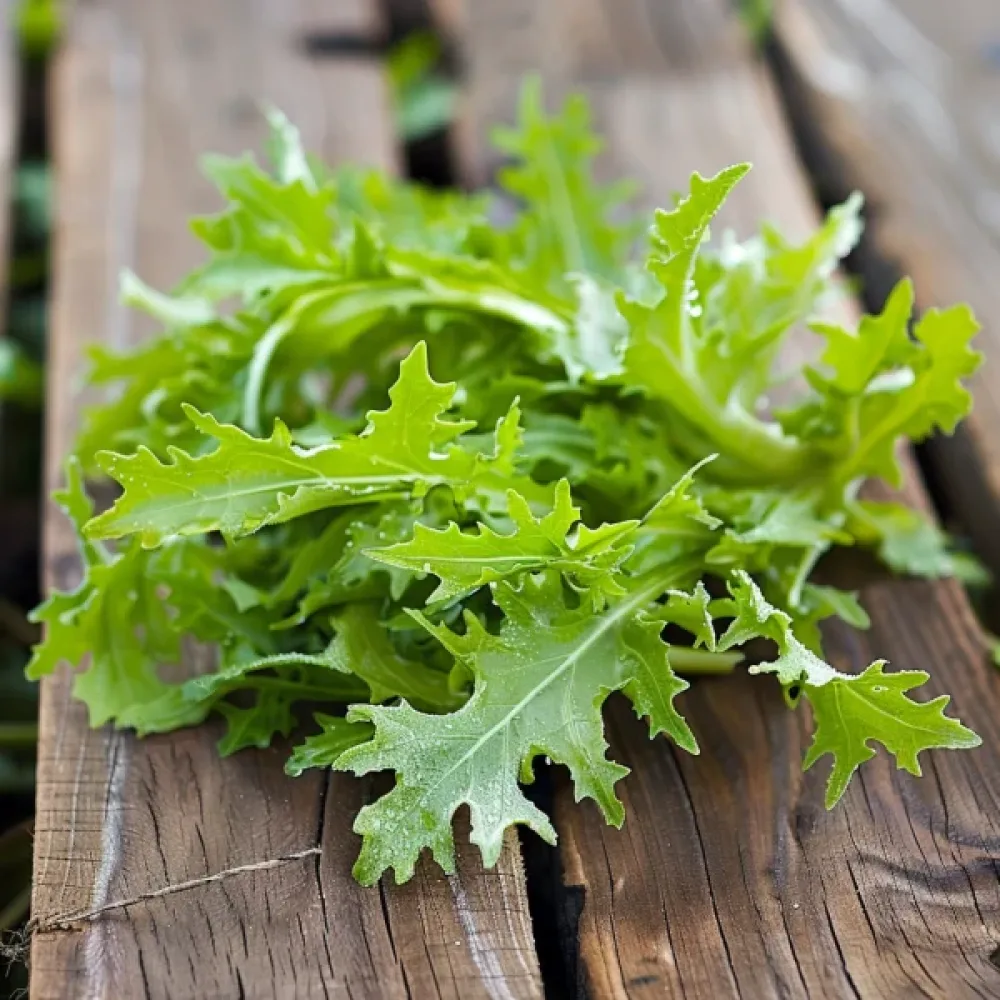
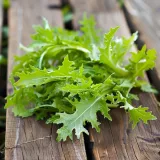
Mizuna Green is an annual vegetable of the cabbage family (Brassicaceae). Mizuna has a distinctive flavour profile and is one of the most interesting vegetables around. Sharp, spicy and magnificent, a staple vegetable in many Asian countries.
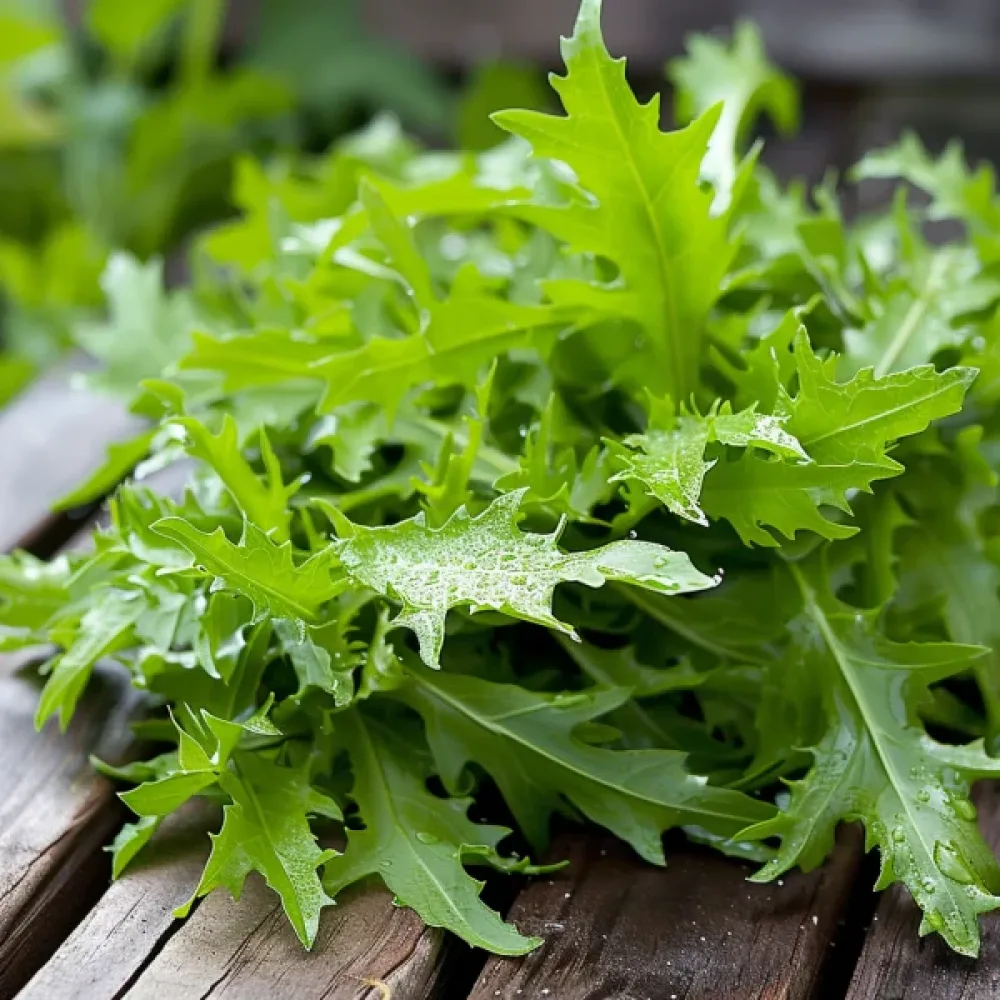
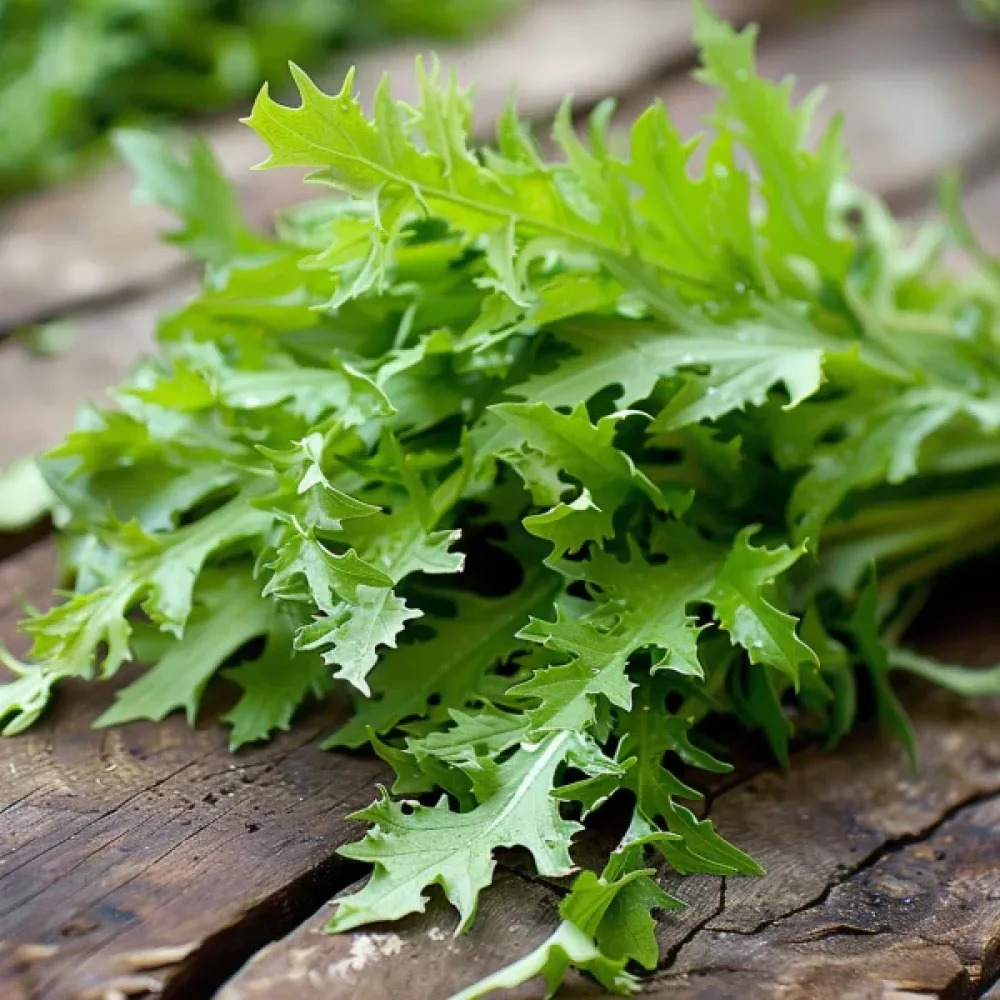
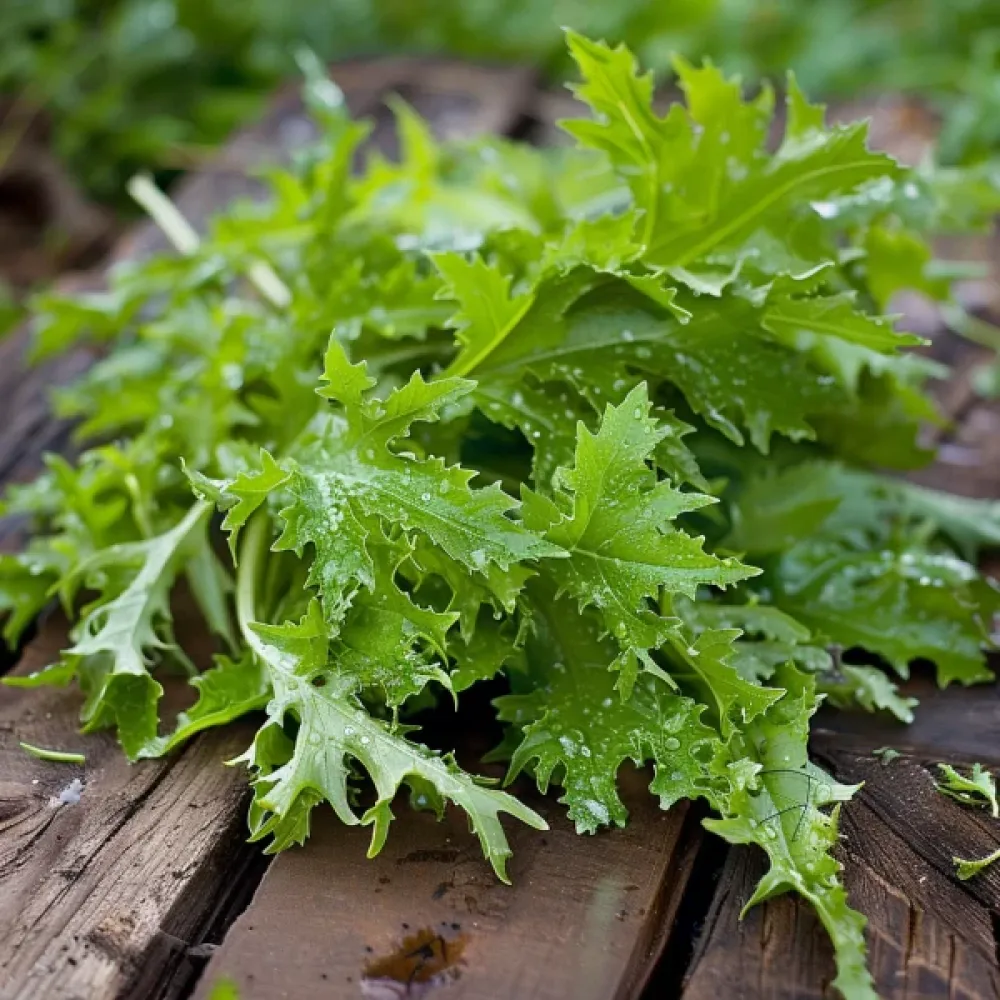
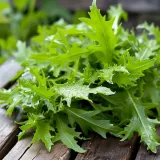
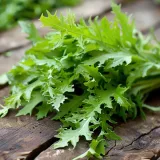
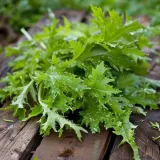
A cross between rocket and mustard, mizuna also has a mild peppery flavour. The plants have feathery serrated edges and a glossy surface, which makes the greens great as an ornamental too.
The plant is most popular in Japan. With a special role in Japanese culture and history, mizuna is used in many Japanese dishes. You will often find the stalks pickled and served as an appetiser or with beer. The leaves are often eaten with rice.
Mizuna is also known as Japanese mustard greens, or shui cai (“water vegetable”). Thanks to its lush green colour and the chlorophyll that comes with it, mizuna is rich in vitamins A, C and K, as well as beta-carotene.
Mizuna and komatsuna are Japanese leafy vegetables with a mild, slightly peppery flavour — for salads, soups and stir-fries. They grow quickly and can be cut repeatedly.
Key features
- Measured germination rate of the batch: 95%
- Pack size: 1 g
- Seed origin: Italy
- Sowing: March and April and September and October; direct
- Harvest: June – October
- Position: sun to partial shade
When to sow Mizuna Green
Mizuna Green seeds are sown in March and April and September and October. Harvest in June – October. The months are a guide for a temperate climate — in warmer areas sow 1–2 weeks earlier, in cooler or upland areas, later.
How to sow and grow Mizuna Green
- Sowing method: direct
- Depth: 0.5–1 cm
- Spacing: 15–25 cm
- Germination: 3–7 days at 15–20 °C
- Position: sun to partial shade
Can be grown from early spring to late autumn, showing resistance to bolting. Growing mizuna is easy. The seeds should be placed in a watered vegetable bed or in a container filled with standard garden soil. This plant requires regular watering and access to light. Leaves that have grown 5-8 cm long can be cut at the base and eaten raw. They will soon regrow, making subsequent harvests possible.
Sow in several batches in spring and late summer; water regularly.
Harvest and use
Cut the leaves 3–5 cm above the ground — the plant regrows.
Frequently asked questions
When should Mizuna Green be sown?
The recommended months for sowing are March and April and September and October. Sowing method: direct.
What is the germination rate of the seeds?
The measured germination rate of this batch is 95%. The test was carried out under controlled laboratory conditions; in the field, emergence depends on soil, temperature and moisture.
Reviews
What the gardeners who order from us say.
No reviews published for this product yet.
Write a review
Mizuna Green
€1.99
Often bought with this
March, April, September, October
May, June
May, June
May, June
March, April, May, June
March, April
March, April
Recently viewed
The list is kept in this browser, on this device only.
