
March, April
Calendar
Sowing
- JAN
- FEB
- MAR
- APR
- MAY
- JUN
- JUL
- AUG
- SEP
- OCT
- NOV
- DEC
Flowering
- JAN
- FEB
- MAR
- APR
- MAY
- JUN
- JUL
- AUG
- SEP
- OCT
- NOV
- DEC
Harvest
- JAN
- FEB
- MAR
- APR
- MAY
- JUN
- JUL
- AUG
- SEP
- OCT
- NOV
- DEC
The months are a guide for a temperate zone.
SKU: GS1169
St John's Wort
Hypericum perforatum
St John's wort is a perennial sub-shrub that grows to 60-120 cm. Germination rate 76%, 1530–2070 seeds per packet.
€1.99
In stock
Prices include VAT. The price shown is for one seed packet.
- Germination measured for the batch
- Paper packet with the packing date
- Within two working days, anywhere in the country.
- Ordered by 15:00 — shipped the same working day
- 14-day return — the right of withdrawal by law
Specifications
- Origin
- Poland
- English name
- Hypericum St. Johns Wort wild form
- Seeds per gram
- 9000
- Germination rate
- 76%
- Seeds per packet
- 1530-2070
- Weight
- 0.005 kg
Sowing
Sow once the soil is warmer than 10 °C, in a sunny spot sheltered from the wind. Sow about three times as deep as the seed is thick, into finely raked soil with no clods on top. Spacing is as printed on the packet — thin the seedlings out after they come up. Water with a fine spray so the seed is not washed away, and keep only the strongest plants.
Description
St John's Wort: variety and characteristics
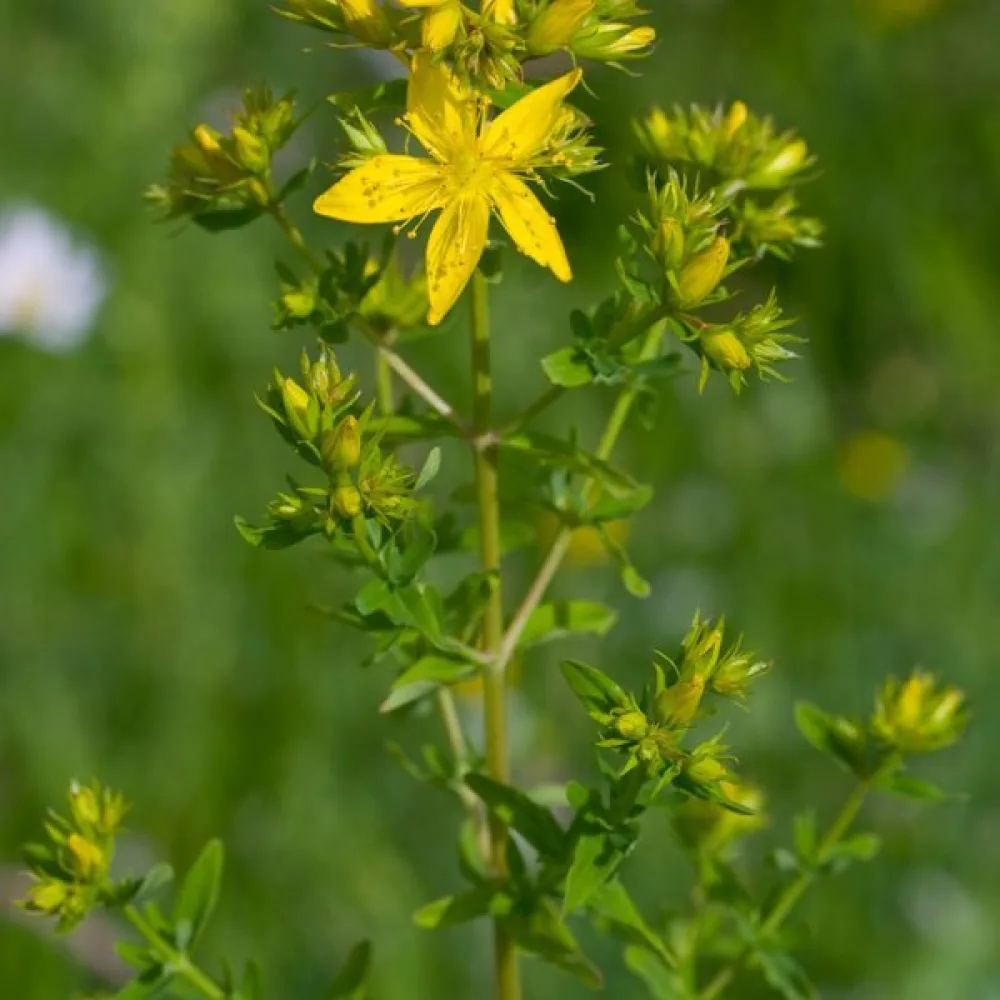
St John's Wort (Hypericum perforatum) is a perennial herb of the Hypericaceae family. St John's wort is a perennial sub-shrub that grows to 60-120 cm. tall. The whole herb is gathered for drying during the main flowering period. Two harvests per year are possible.
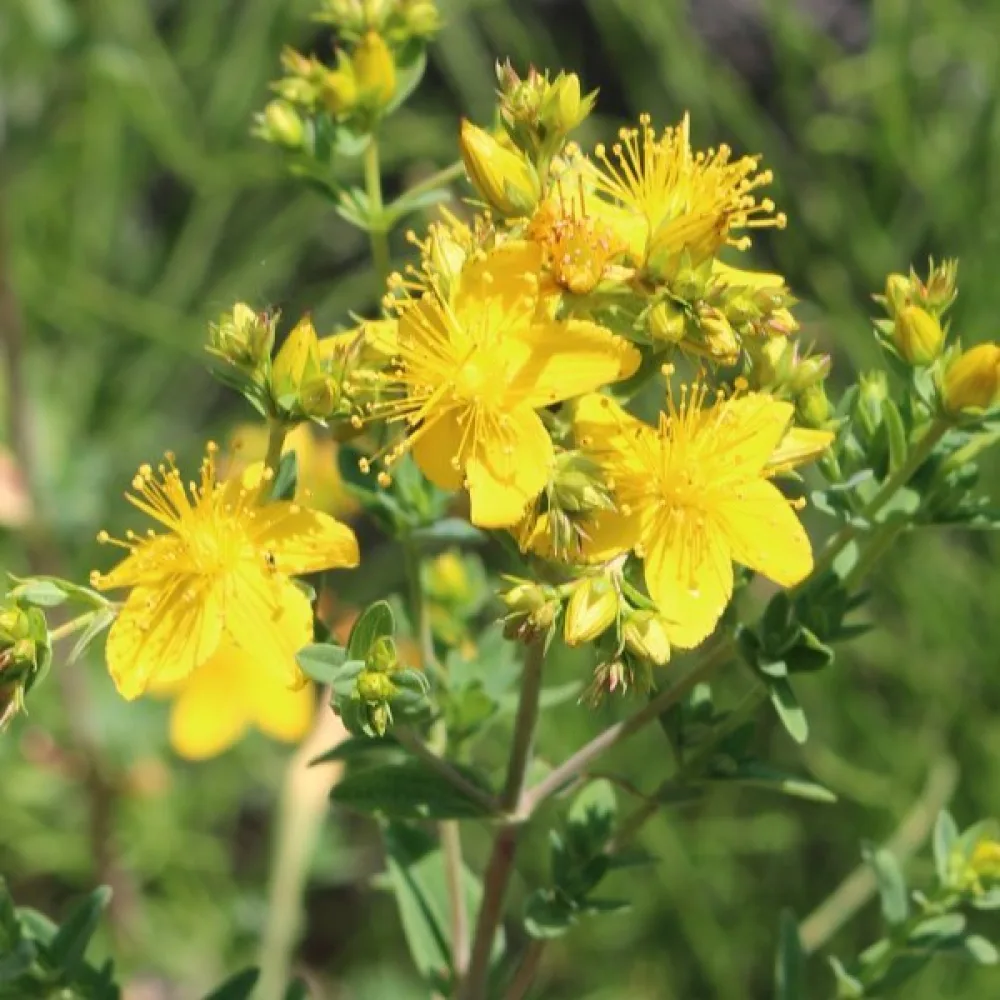
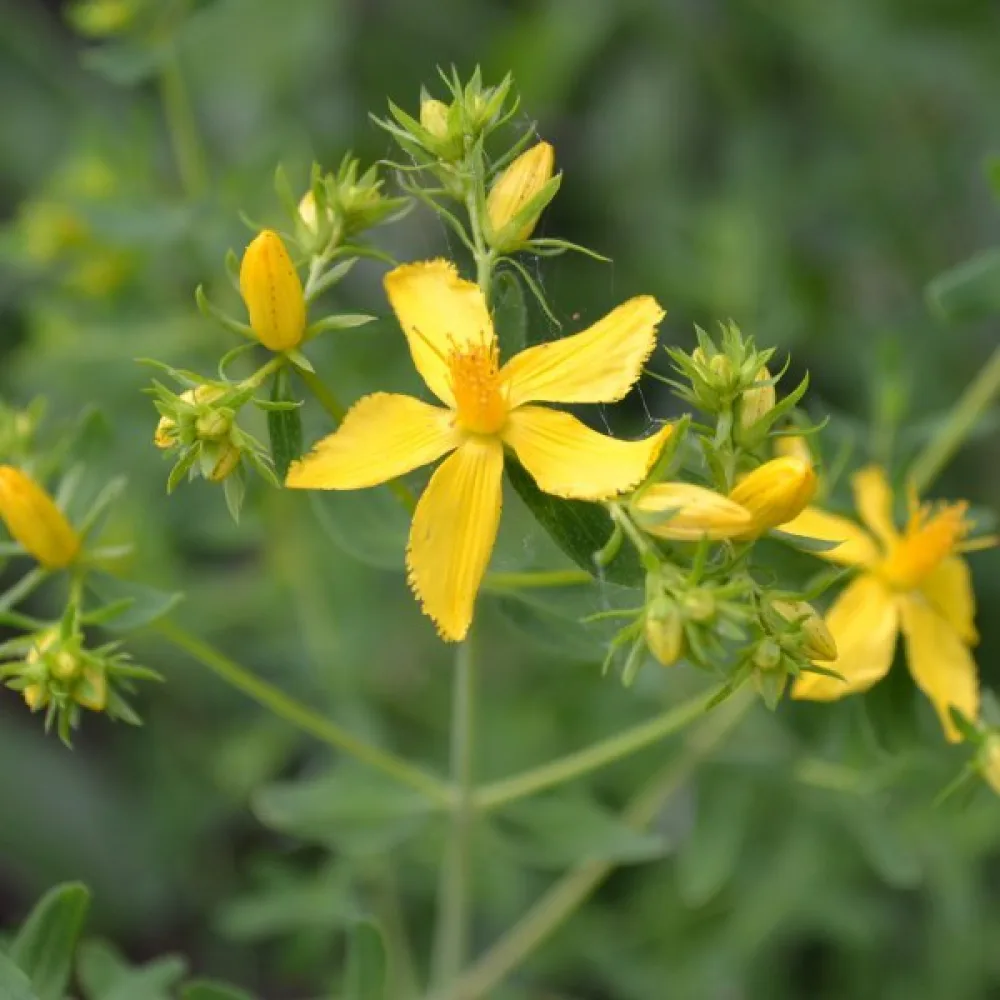
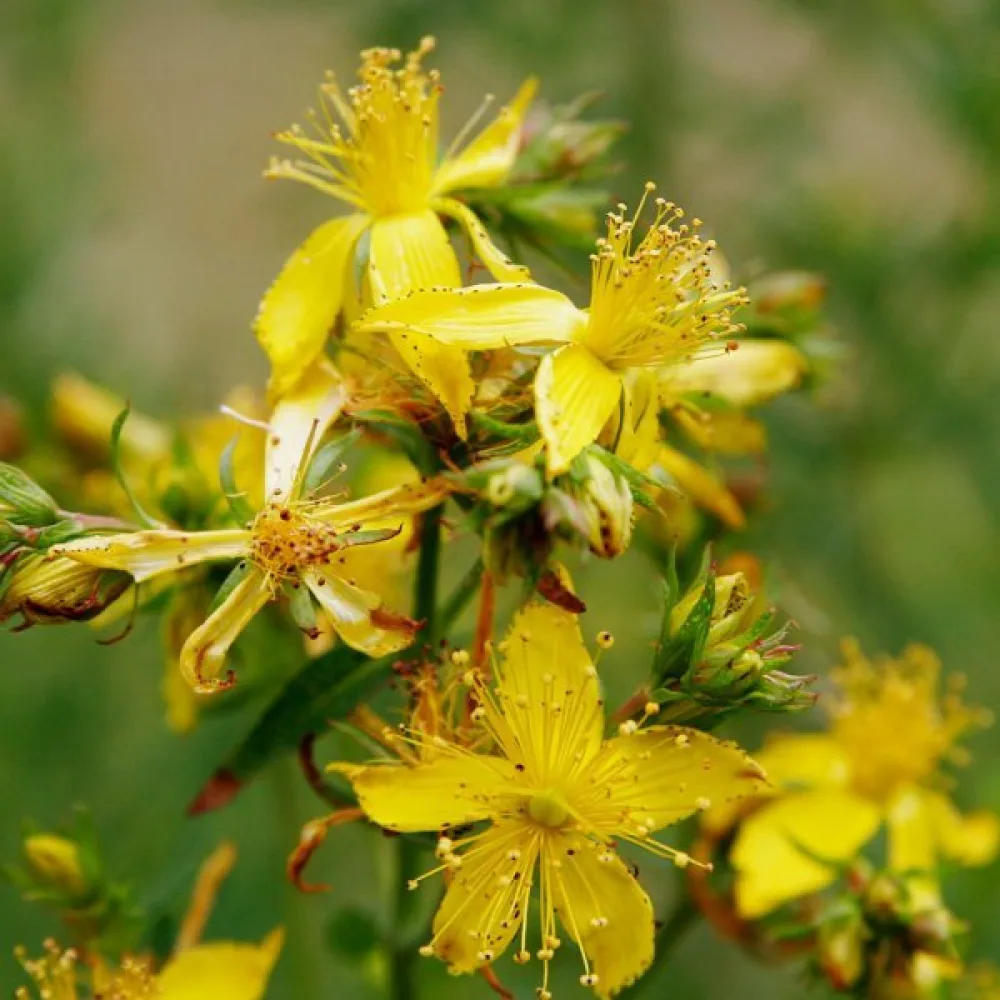
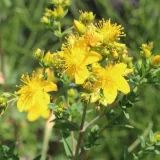
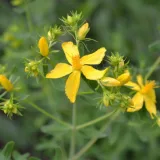
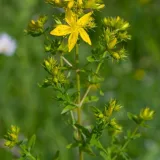
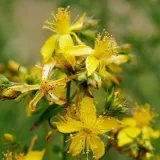
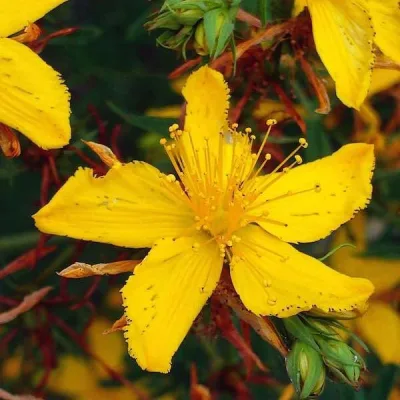
St John's wort flowers abundantly in summer and autumn, producing clusters of bright yellow star-shaped flowers. The flowers have five petals with black dots and very prominent yellow stamens, which together resemble the fine bristles of a brush.
The leaves have a peculiar, distinctive smell and a bitter taste. When crushed, the flower petals can release a red oil. Use of the herb stimulates digestion. As a tea it is used for nervous strain, mild depression and insomnia.
A diuretic and a gallbladder stimulant. The flowers are used to make red oil. The oil is used to treat wounds, sprains, neuralgia and rheumatism.
St John's wort is one of the most valued Bulgarian medicinal herbs – for tea and oils.
Key features
- Measured germination rate of the batch: 76%
- Seeds per packet: 1530–2070 pcs (0.2 g)
- Seed origin: Poland
- Sowing: March and April; transplants or direct
- Flowering: June – September
- Harvest: May – July
- Position: sunny spot
When to sow St John's Wort
St John's Wort seeds are sown in March and April. The plants flower from June to September. The crop is harvested from May to July. The months are a guide for a temperate climate — in warmer areas sow 1–2 weeks earlier, in cooler or upland areas, later.
How to sow and grow St John's Wort
- Sowing method: seedlings or direct
- Depth: on the surface
- Spacing: 30 cm
- Germination: 14–28 days at 18–22 °C
- Position: sunny spot
The plants grow well in sun or partial shade, but flower better in a sunny position. It thrives in a summer meadow and is a useful plant for attracting insects. St John's wort does not like clay, acid and alkaline soils; it feels best in chernozem and sandy soils. It also grows well in moderately fertile soils. Sowing St John's wort is recommended in early spring. It is important to keep a distance between rows of 40–45 cm. The seeds are laid on the surface without being buried. They are sprinkled with a little soil or sand and watered. The seeds begin to germinate at a temperature of 5–6 °C. The optimum temperature for this crop is 20–25 °C.
The seeds are very small and germinate in light.
Harvest and use
The flowering tops are harvested in June–July.
Frequently asked questions
When should St John's Wort be sown?
The recommended sowing months are March and April. Sowing method: seedlings or direct.
How many seeds are in the packet?
The packet contains 1530–2070 seeds, pack size 0.2 g.
What is the germination rate of the seeds?
The measured germination rate of this batch is 76%. The test was carried out under controlled laboratory conditions; in the field, emergence depends on soil, temperature and moisture.
Reviews
What the gardeners who order from us say.
No reviews published for this product yet.
Write a review
St John's Wort
€1.99
Often bought with this
April, May
February, March, April
March, April
February, March, April
March, April
March, April
March, April, May, September, October, November
Recently viewed
The list is kept in this browser, on this device only.
