






February, March, April
Calendar
Sowing
- JAN
- FEB
- MAR
- APR
- MAY
- JUN
- JUL
- AUG
- SEP
- OCT
- NOV
- DEC
Flowering
- JAN
- FEB
- MAR
- APR
- MAY
- JUN
- JUL
- AUG
- SEP
- OCT
- NOV
- DEC
Harvest
- JAN
- FEB
- MAR
- APR
- MAY
- JUN
- JUL
- AUG
- SEP
- OCT
- NOV
- DEC
The months are a guide for a temperate zone.
SKU: GS0822
Chinese Lantern Orange
Physalis alkekengi
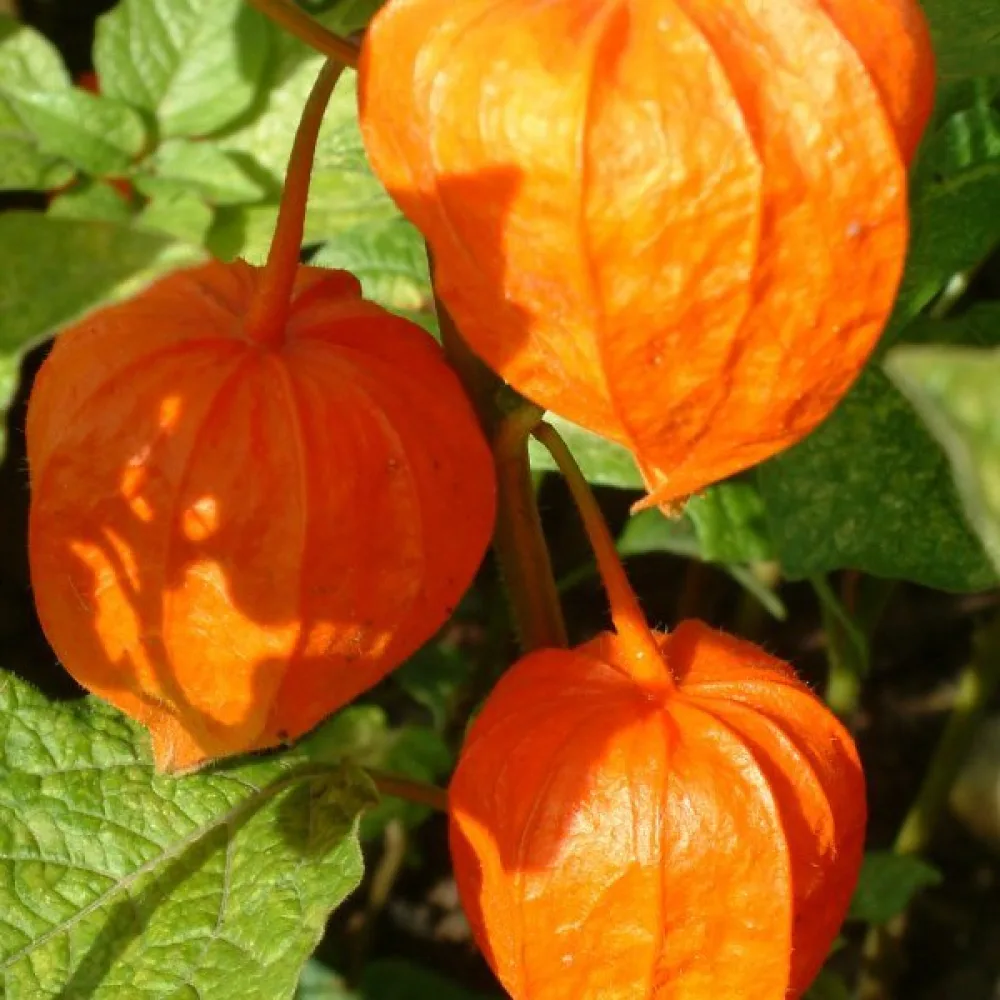
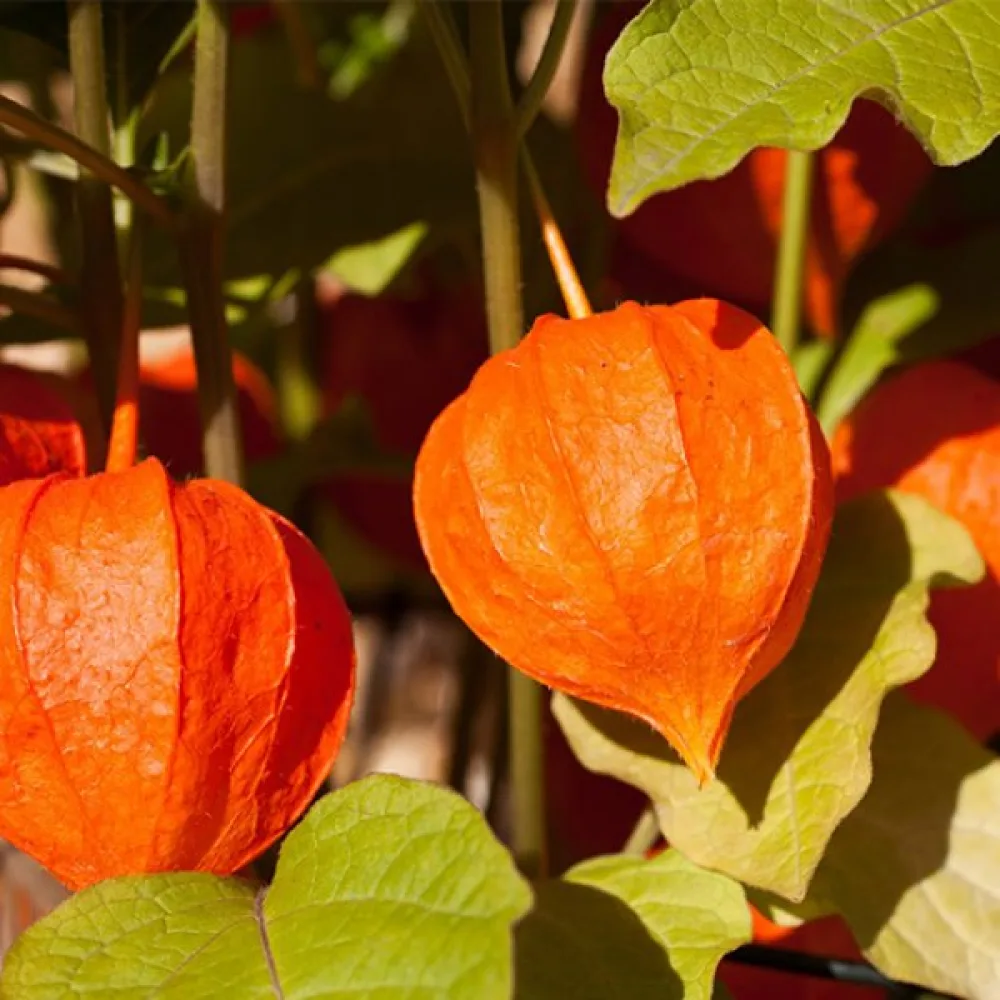
Small, creamy-white flowers from July to August, followed by bright orange-red fruits enclosed in papery red lanterns.
€1.99
In stock
Prices include VAT. The price shown is for one seed packet.
- Germination measured for the batch
- Paper packet with the packing date
- Within two working days, anywhere in the country.
- Ordered by 15:00 — shipped the same working day
- 14-day return — the right of withdrawal by law
Specifications
- Origin
- China
- English name
- Physalis alkekengi var. franchetti orange
- Seeds per gram
- 600
- Germination rate
- 91%
- Seeds per packet
- 102-138
- Weight
- 0.005 kg
Sowing
Sow once the soil is warmer than 10 °C, in a sunny spot sheltered from the wind. Sow about three times as deep as the seed is thick, into finely raked soil with no clods on top. Spacing is as printed on the packet — thin the seedlings out after they come up. Water with a fine spray so the seed is not washed away, and keep only the strongest plants.
Description
Chinese Lantern Orange: variety and characteristics
Chinese Lantern Orange (Physalis alkekengi) is an annual vegetable of the Nightshade family (Solanaceae). Small, creamy-white flowers from July to August, followed by bright orange-red fruits enclosed in papery red lanterns.
Chinese lanterns are ideal for providing autumn interest in well-drained areas of the garden.
Paper lanterns make wonderful dried flower arrangements.
Physalis bears sweet-and-sour orange berries hidden in papery "lanterns". Grown like a tomato and fruits until the first frost.
Key features
- Measured germination rate of the batch: 91%
- Seeds per packet: 102–138 pcs (0.2 g)
- Seed origin: China
- Sowing: February and March; seedlings
- Harvest: July – November
- Position: sunny spot
When to sow Chinese Lantern Orange
Chinese Lantern Orange seeds are sown in February and March. The crop is harvested from July to November. The months are a guide for a temperate climate — in warmer areas sow 1–2 weeks earlier, in cooler or upland areas, later.
How to sow and grow Chinese Lantern Orange
- Sowing method: seedlings
- Depth: 0.5 cm
- Spacing: 60–80 cm
- Germination: 10–20 days at 22–25 °C
- Position: sunny spot
Choose a well-drained spot in full to partial sun. Chinese lanterns can tolerate various soil types but prefer slightly acidic to neutral soil. Make sure there is enough room for the mature plants to spread, as they can become somewhat invasive. Prepare the soil by removing weeds and debris from the chosen area. Work in organic matter such as compost to enrich the soil and improve moisture retention. Plant the Chinese lantern seeds about 0.6 cm deep in the prepared soil. Space them at least 60 cm apart to allow for their spreading habit. Water the planted seeds gently but generously so they settle into the soil. Make sure the soil stays consistently moist during germination and the early stages of growth. Chinese lantern seeds usually germinate in 2-3 weeks, but the germination rate may vary. Be patient and keep the soil consistently moist during this period.
Likes a warm, sunny spot and moderate watering; too much fertiliser gives leaves instead of fruit.
Harvest and use
The fruits are ready when the husk dries and turns straw-yellow; those that have fallen to the ground are also ripe.
Frequently asked questions
When should Chinese Lantern Orange be sown?
The recommended sowing months are February and March. Sowing method: seedlings.
How many seeds are in the packet?
The packet contains 102–138 seeds, pack size 0.2 g.
What is the germination rate of the seeds?
The measured germination rate of this batch is 91%. The test was carried out under controlled laboratory conditions; in the field, emergence depends on soil, temperature and moisture.
Can physalis be grown in a pot?
Yes — in a container of at least 15 l on a sunny balcony it gives a good yield.
Reviews
What the gardeners who order from us say.
No reviews published for this product yet.
Write a review
Chinese Lantern Orange
€1.99
Often bought with this
February, March, April
March, April, May

January, February, March
February, March
February, March
February, March
February, March
Recently viewed
The list is kept in this browser, on this device only.
