

April
Calendar
Sowing
- JAN
- FEB
- MAR
- APR
- MAY
- JUN
- JUL
- AUG
- SEP
- OCT
- NOV
- DEC
Flowering
- JAN
- FEB
- MAR
- APR
- MAY
- JUN
- JUL
- AUG
- SEP
- OCT
- NOV
- DEC
Harvest
- JAN
- FEB
- MAR
- APR
- MAY
- JUN
- JUL
- AUG
- SEP
- OCT
- NOV
- DEC
The months are a guide for a temperate zone.
SKU: GS1897
Winter Squash Muscade de Provence
Cucurbita moschata
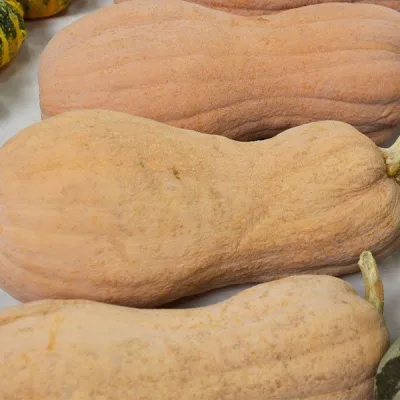
This variety comes from southern France, producing large, flat, strongly ribbed fruits (8 kg) that ripen to a deep brown.
€1.99
In stock
Prices include VAT. The price shown is for one seed packet.
- Germination measured for the batch
- Paper packet with the packing date
- Within two working days, anywhere in the country.
- Ordered by 15:00 — shipped the same working day
- 14-day return — the right of withdrawal by law
Specifications
- Origin
- Ukraine
- English name
- Cucurbita moschata Muscade de Provence
- Seeds per gram
- 6
- Germination rate
- 98%
- Seeds per packet
- 10-14
- Weight
- 0.005 kg
Sowing
Sow once the soil is warmer than 10 °C, in a sunny spot sheltered from the wind. Sow about three times as deep as the seed is thick, into finely raked soil with no clods on top. Spacing is as printed on the packet — thin the seedlings out after they come up. Water with a fine spray so the seed is not washed away, and keep only the strongest plants.
Description
Winter Squash Muscade de Provence: variety and characteristics
Winter Squash Muscade de Provence (Cucurbita moschata) is an annual vegetable of the Gourd family (Cucurbitaceae). This variety comes from southern France, producing large, flat, strongly ribbed fruits (8 kg) that ripen to a deep brown.
120 days are needed to full maturity. The flesh is deep orange, heavy, with a fine sweet flavour.
It will keep for a long time if left to ripen fully until midwinter.
The pumpkin is the symbol of the autumn garden — for roasting, pies, soups, purées and long winter storage. Besides edible ones, there are also ornamental varieties for decoration.
Key features
- Measured germination rate of the batch: 98%
- Seeds per packet: 10–14 pcs (2 g)
- Seed origin: Ukraine
- Sowing: April; direct or seedlings
- Harvest: October
- Position: sunny spot
When to sow Winter Squash Muscade de Provence
Winter Squash Muscade de Provence seeds are sown in April. Harvest takes place in October. The months are a guide for a temperate climate — in warmer areas sow 1–2 weeks earlier, in cooler or upland areas, later.
How to sow and grow Winter Squash Muscade de Provence
- Sowing method: direct or seedlings
- Depth: 3–4 cm
- Spacing: 1–2 m
- Germination: 5–10 days at 20–25 °C
- Position: sunny spot
Pumpkins germinate easily in warm soil; gardeners in cooler areas can start their seedlings in pots in a warm place and plant them out after the risk of frost has passed. Pumpkins need plenty of water while growing; mulch well to retain moisture and suppress weeds. Harvest pumpkins when the stalk attaching them to the plant becomes woody and corky. Cut (do not pull) the stalk from the plant. Never lift the pumpkin by this "handle", because if it breaks off, the pumpkin will go mouldy within days.
Sow directly into warm soil (above 15 °C) at 2–3 seeds per hill, or plant transplants at 3–4 weeks. The pumpkin likes rich, fertilised soil and generous watering when the fruit sets.
Harvest and use
Harvest when the stalk dries and the skin cannot be dented by a fingernail. Leave pumpkins in the sun for 1–2 weeks to “cure” before storing.
Frequently asked questions
When should Winter Squash Muscade de Provence be sown?
The recommended sowing month is April. Sowing method: direct or seedlings.
How many seeds are in the packet?
The packet contains 10–14 seeds, pack size 2 g.
What is the germination rate of the seeds?
The measured germination rate of this batch is 98%. The test was carried out under controlled laboratory conditions; in the field, emergence depends on soil, temperature and moisture.
How long does a pumpkin keep?
Well-ripened pumpkins with the whole stalk keep for 3–6 months in a dry, cool place (10–15 °C).
When is pumpkin sown?
Directly outdoors after the last frosts — late April and May; for an earlier harvest, transplants from early April.
Reviews
What the gardeners who order from us say.
No reviews published for this product yet.
Write a review
Winter Squash Muscade de Provence
€1.99
Often bought with this
April
April, May
April, May
April
April
April
April
Recently viewed
The list is kept in this browser, on this device only.
