This grape variety originates from Southern France.
In the cognac area it is gradually displacing the Folle Blanche variety. It is also widely grown in Tuscany, Italy, where it is called Trebbiano, which is why many are of the opinion that its homeland is there.
It also thrives well in Bulgaria, Moldova, Canada. It became famous as early as 1302, when it was described by the Italian botanist Pietro de' Crescenzi. It is also called Muscadelle, and it is often added in a small amount in the assemblage of white wines. In a certain quantity, added to grapes of red varieties, it is part of the composition of the famous "Chianti" wines.
This variety, of which there are about 11 250 ha in the Armagnac region (75 % of the vineyard area), is well adapted to the local soils, is resistant to cold, adapted to powdery mildew and grey mould, and is relatively resistant to drought and very fertile - up to 100-150 hl of wine are obtained from one hectare. Trebbiano is one of the main varieties from which "Armagnac" is made.
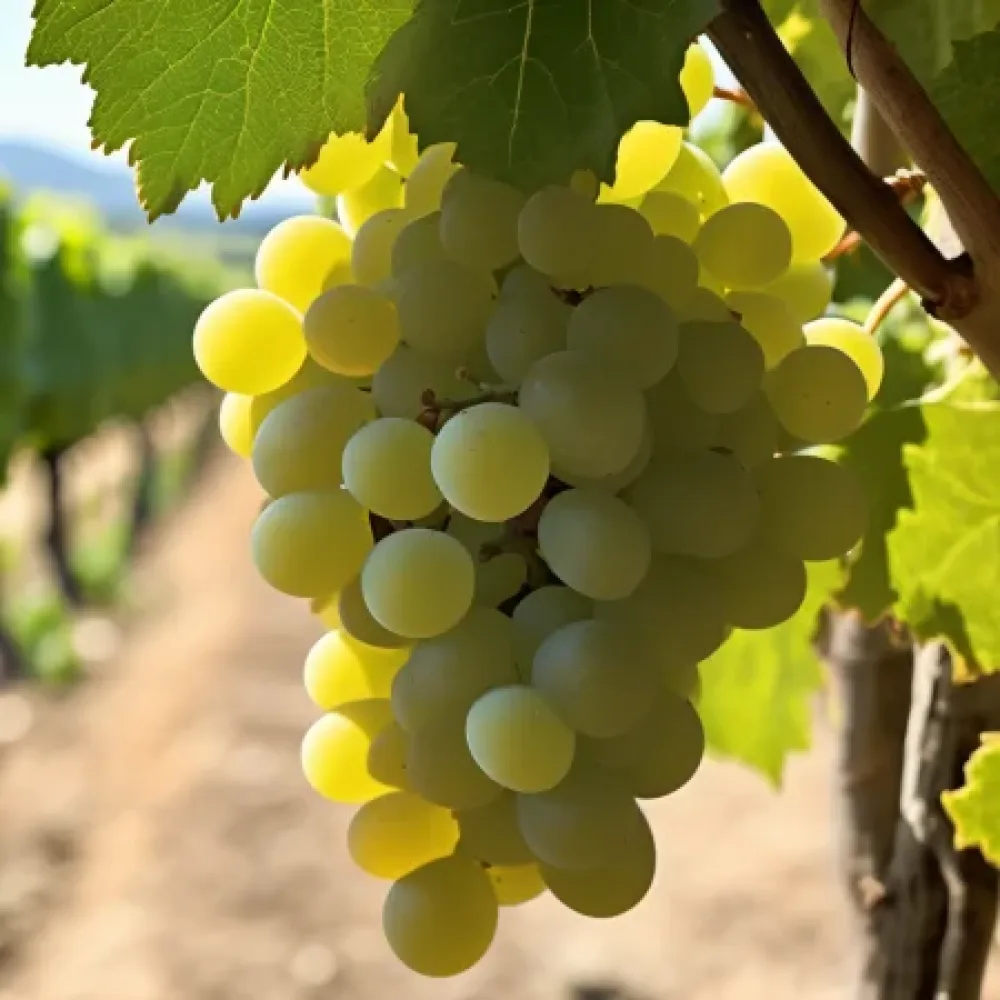
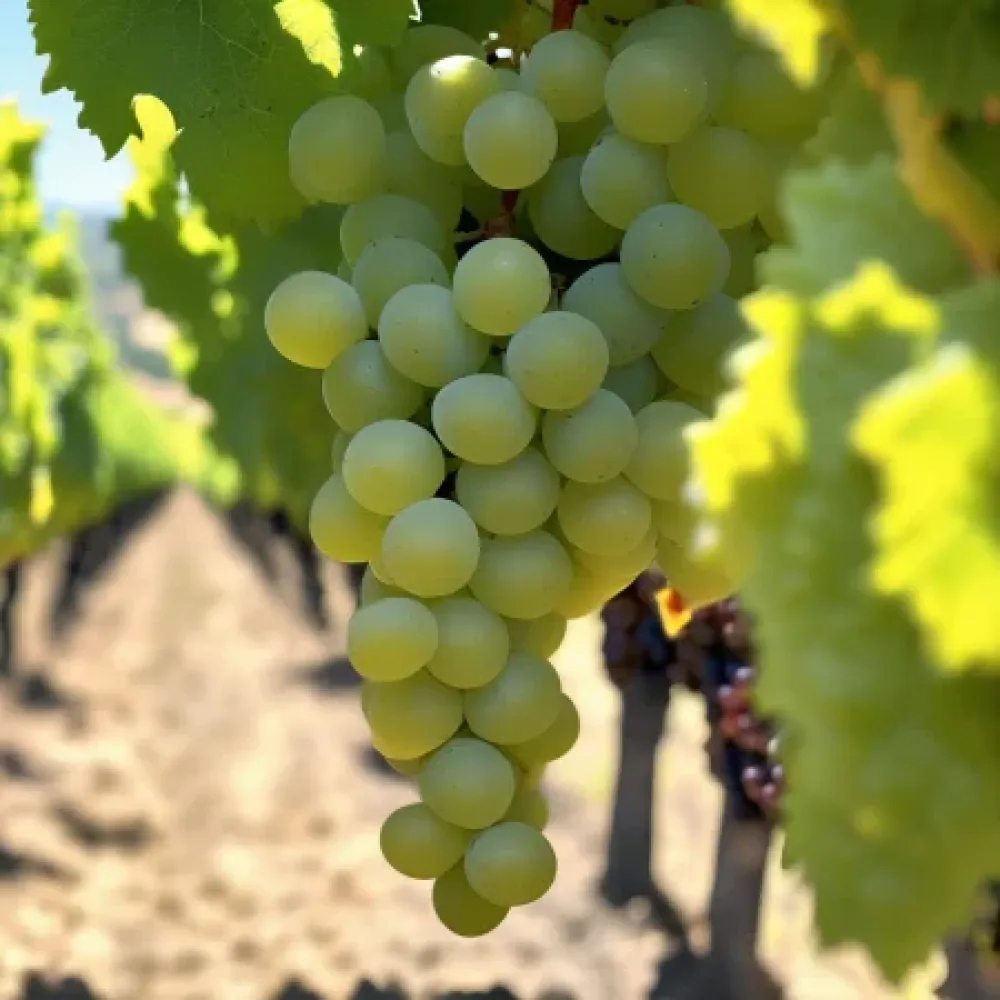
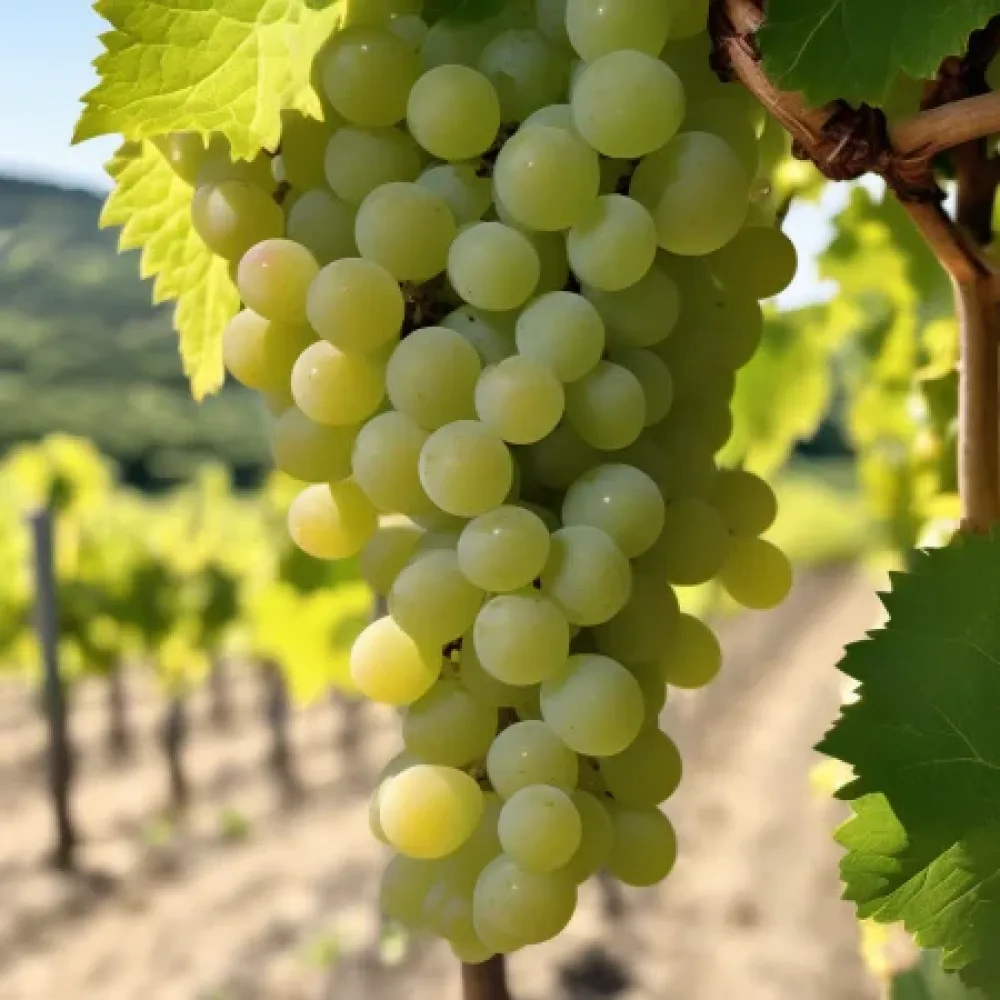
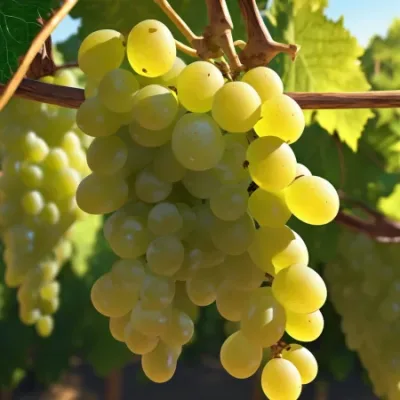
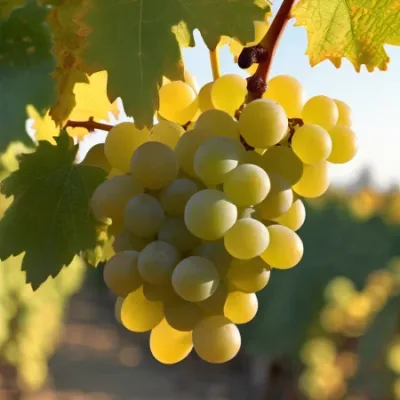
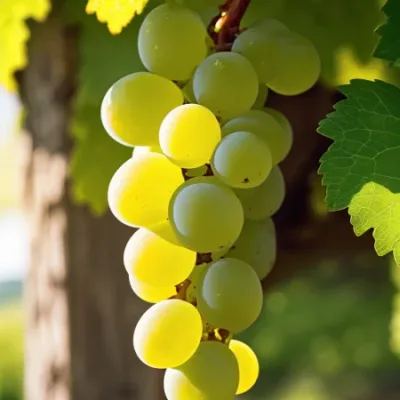
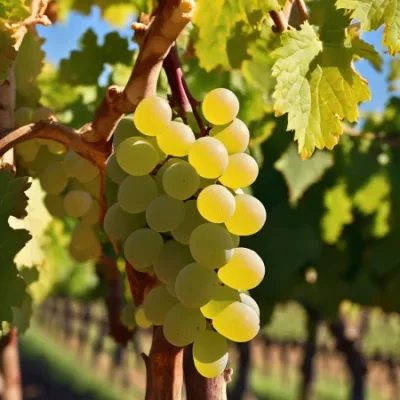
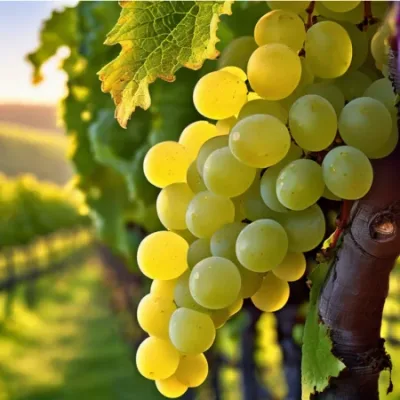
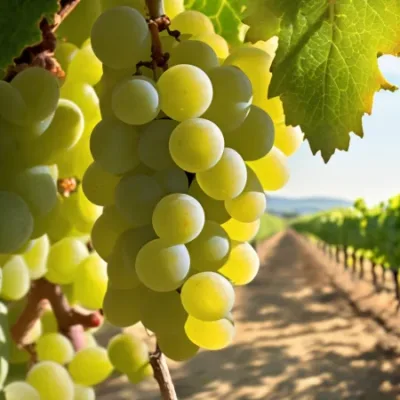
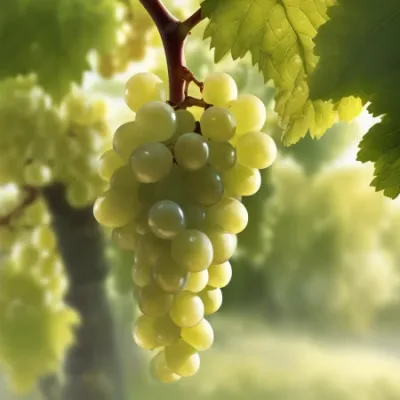
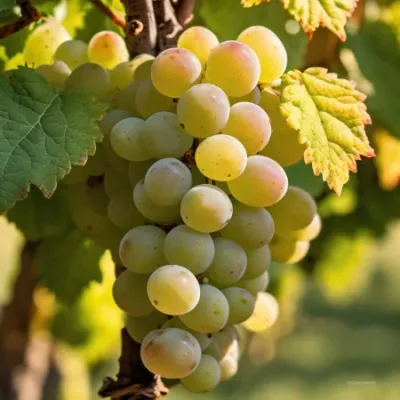
Agrobiological characteristics - belongs to the group of late-ripening varieties (its grapes ripen at the end of September - beginning of October). The bunch is medium to large, winged. The berry is small, almost spherical, covered with a medium thick, tough, yellow-green skin with a waxy bloom. Poor fruit set and shot berries (millerandage) are not observed in this variety. It has affinity with the rootstocks common in the country, but the most suitable for it is 41 B.
Technological characteristics - at eating ripeness the grapes accumulate about 18-21% sugars and a titratable acid content of 7-9.5 g/l. The grapes have good sugar content, reaching 24-25%, and high acidity. Its wines have a delicate flavour and quickly develop a bouquet, but do not improve with ageing. In Bulgaria it is used mainly for distillate base wines.
Resistance - the vines are poorly resistant to low winter temperatures and drought, but have good resistance to powdery mildew and grey mould.
Yield - they are distinguished by good growth and very good fertility (the average yield per decare is 1000-1500 kg). In the Pomorie and Burgas region, base wines for making brandy ("Aheloy") are obtained from it.
Leaf — large, oval lengthwise, strongly cut, 5-lobed, downy. The blade is curled upwards indefinitely, with a coarsely blistered surface. The outline of the middle lobe forms an acute angle. The upper sinuses are deep to medium, closed, with an egg-shaped opening and a rounded base. The lower sinuses are shallow, open, with parallel sides and a pointed base. The petiolar sinus is open, lyre-shaped, with a pointed base or closed, with an elliptical opening. The teeth are large, triangular, with a broad base, sometimes lighter in colour. The veins on the upper and lower side are light yellowish. The petiole is medium long, light green, glabrous. The autumn colour of the leaf is yellow.
Flower — hermaphrodite. Bunch — large, conical, branched at the base, winged, moderately compact. The stalk is medium long, medium thick, woody throughout, tough. Berry — almost small, spherical, greenish-yellow (turning pink when overripe) with tiny, sparse dots. The skin is translucent, thick, tough. The flesh is juicy, with a harmonious flavour. The pedicel is medium long, thin, with a small cone-shaped cushion and a short brush.
Ugni Blanc is a very late wine variety. Its grapes ripen in the first half of October. It prefers light sandy-loam soils, where it shows its valuable qualities. It has vigorous growth, very high fertility and high yield. Its affinity with the rootstocks common in Bulgaria is good. It is sensitive to cold and relatively resistant to drought. Its grapes do not crack and hardly ever rot. Because of its high acidity, high-quality cognac base wines that mature quickly are obtained from its grapes. In the Charente and Armagnac provinces (France) it has displaced other varieties such as Folle Blanche, for the production of cognacs and armagnac.